
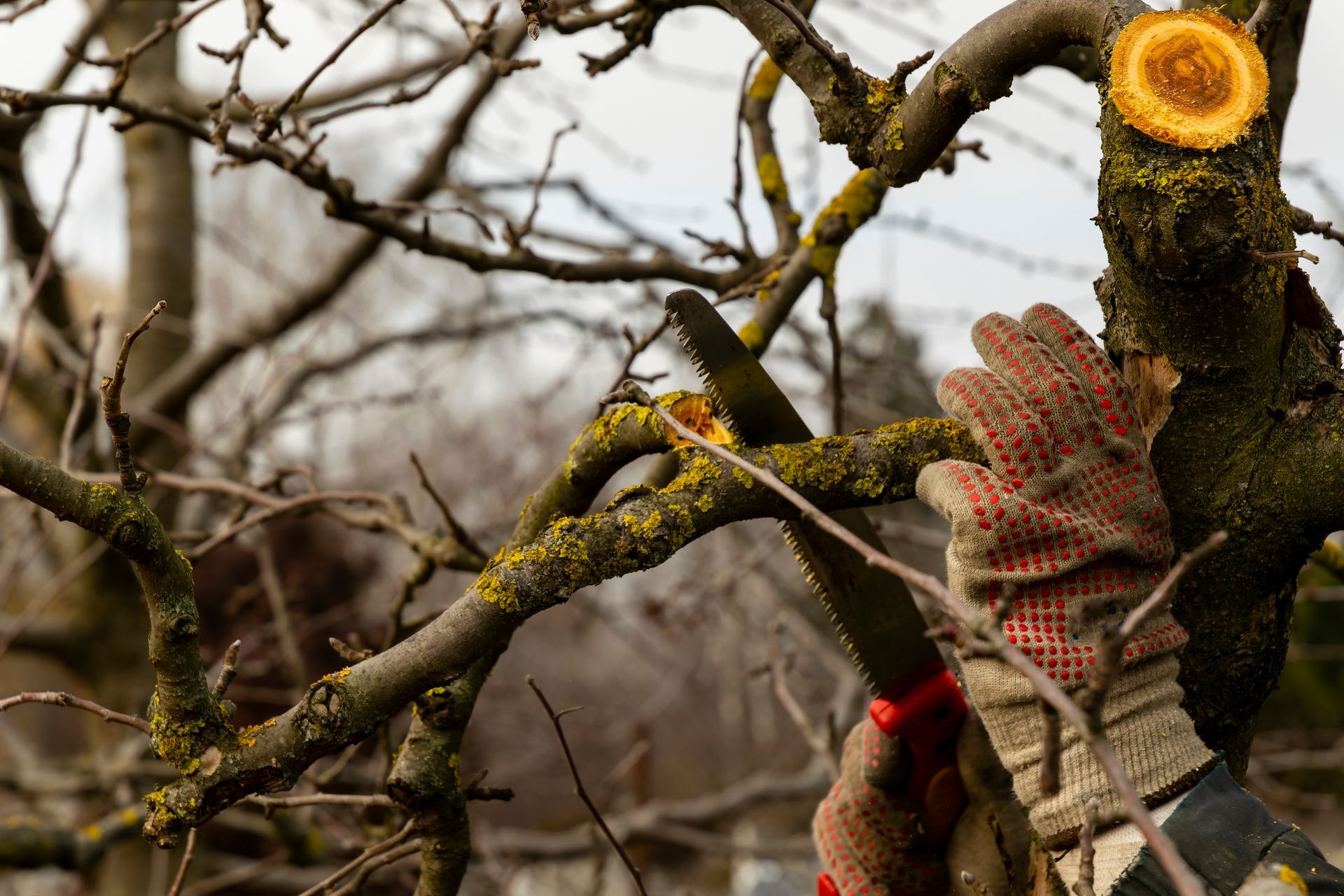
Selective Branch Removal Based on Tree Condition
Tree Pruning in Dimondale for dead, damaged, or crossing growth that affects tree structure and appearance
Trees develop dead branches, limbs damaged by storms, and crossing growth that rubs and creates wounds over time. Pruning addresses those issues by removing specific branches while leaving healthy growth intact. Caleb's Green Thumb, LLC provides tree pruning in Dimondale, Potterville, Eaton Rapids, and surrounding areas based on each tree's condition, structure, and the growth patterns observed during evaluation. You notice cleaner branch structure, fewer dead limbs overhead, and a canopy that no longer includes visibly damaged or rubbing growth.
Pruning is selective rather than general trimming—it targets branches that harm the tree or create future problems instead of simply reducing canopy size. Dead and damaged limbs are removed to prevent breakage, and crossing branches are cut back to eliminate friction points before bark damage spreads.
Request an evaluation to review your tree's condition and determine which branches should be removed based on structure and health.
Why Pruning Needs Vary by Tree and Timing
Each tree develops differently depending on species, age, site conditions, and previous maintenance. Pruning decisions depend on what the tree needs—removing storm-damaged limbs after severe weather, cutting out dead growth noticed during dormancy, or addressing crossing branches before they create open wounds susceptible to decay.
After pruning, the tree's structure appears more balanced, with fewer limbs that hang at awkward angles or show visible decline. Growth focuses on healthy branches rather than supporting dead or damaged wood, and crossing limbs no longer rub together during windy conditions common in Michigan.
Pruning timing varies by tree type—some species tolerate pruning year-round, while others respond better when pruned during dormancy or after flowering. Extensive pruning is avoided during active growth periods when trees allocate energy to new foliage rather than wound closure.
What Property Owners Ask About Pruning
Homeowners often want to understand how pruning differs from other tree work, what gets removed, and how decisions are made about which branches to cut.
Caleb's Green Thumb, LLC evaluates each tree individually to determine which branches should be removed and when pruning should be scheduled for the best outcome. Arrange a consultation to assess your tree's structure, condition, and pruning needs specific to your property.
What makes pruning different from trimming?
Pruning focuses on removing dead, damaged, or structurally problematic branches to improve tree health and form, while trimming primarily addresses clearance and reduces canopy size for access or light.
How are branches selected for removal during pruning?
Branches showing dieback, storm damage, bark wounds from rubbing, or growth angles that create weak attachment points are prioritized, along with limbs that cross through the canopy and interfere with stronger growth.
When is the best time to prune trees in Dimondale?
Pruning schedules depend on tree species and the reason for pruning, though many residential projects occur during late winter or early spring when branch structure is visible and trees are dormant.
Why do some trees require more frequent pruning than others?
Trees with naturally dense canopies, fast growth rates, or previous storm damage often develop crossing or problematic branches more quickly than slow-growing species with open, well-spaced structure.
What will I notice after pruning is completed?
You will see fewer dead or damaged limbs in the canopy, better spacing between major branches, and a tree structure that appears more organized without growth that crosses or competes internally.