
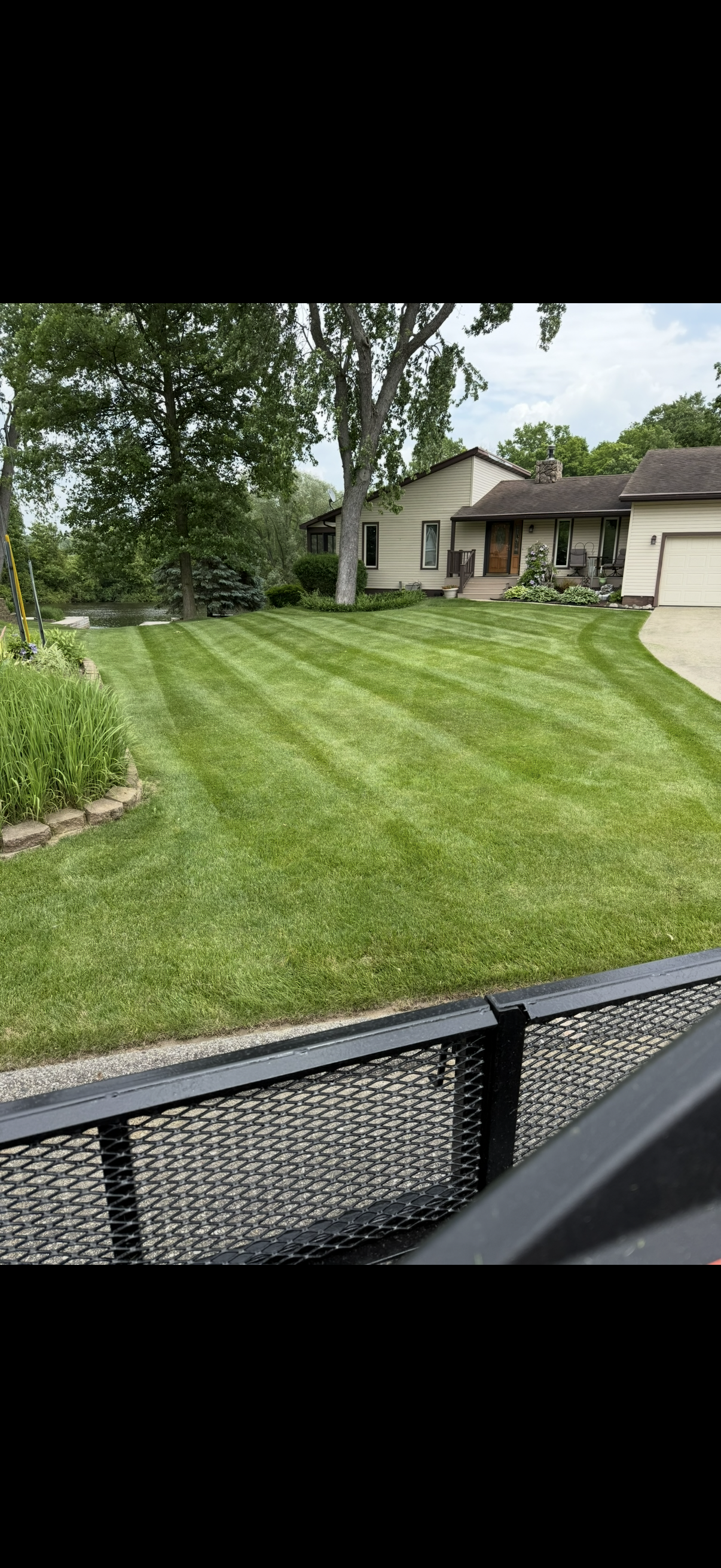
Turf Coverage Where Grass Has Thinned
Lawn Seeding in Dimondale for bare patches, worn trails, and areas where existing grass no longer fills in
Bare soil collects weed seeds faster than struggling turf can spread, and thin spots worsen each season as foot traffic, weather, and mower wear concentrate on the same weak zones. Lawn seeding introduces new grass plants to these areas, giving the turf a chance to thicken before erosion or invasive growth takes over. Caleb's Green Thumb, LLC provides lawn seeding services for residential properties in Dimondale, Holt, Lansing, and surrounding areas where coverage has declined due to compaction, shade shifts, construction disturbance, or repeated stress from pets and play areas.
Successful seeding depends on seed-to-soil contact, which requires loosening compacted ground, removing debris that blocks seed placement, and ensuring moisture reaches the seed without washing it away. Timing matters in Michigan's climate—early fall seeding takes advantage of warm soil and cooler air that favor germination without the weed competition and heat stress of late spring. Preparation may include light raking, dethatching, or topdressing with soil amendments depending on the condition of the existing lawn.
Arrange an on-site evaluation to review thin areas and establish a seeding approach based on soil condition and seasonal timing.
How Seeding Rebuilds Lawn Density
Seeding works by filling gaps in the turf canopy with new grass plants that establish independent root systems rather than relying on lateral spread from surrounding mature grass. Once seed germinates and roots anchor, those new shoots compete for light and space, gradually weaving into the existing lawn and creating a denser surface that resists thinning under normal use.
After seeding and appropriate watering, you notice fine green shoots emerging within ten to fourteen days in favorable conditions, followed by gradual thickening over the next several weeks as roots deepen and blades mature. The newly seeded areas transition from bare or sparse ground to functional turf that blends with established grass, reducing the visual patchwork and improving resilience against future wear.
Seeding does not instantly restore a lawn, and success depends on consistent moisture during germination, limited traffic until roots establish, and realistic expectations about coverage density in heavily shaded or compacted zones. Some areas may require repeat seeding or additional soil correction to achieve full coverage.
Common Questions About This Service
Seeding outcomes depend on timing, preparation, and aftercare, and these answers address typical concerns for properties around Dimondale and neighboring communities.
Caleb's Green Thumb, LLC handles lawn seeding for Dimondale area properties where turf has thinned or coverage is insufficient. Request service details and a property estimate to evaluate seeding needs and timing for your lawn's specific conditions.
What time of year works best for lawn seeding in Michigan?
Early fall, typically late August through mid-September, offers warm soil that speeds germination and cooler air that reduces heat stress, with fewer weeds competing against new grass than during spring seeding windows.
How is the ground prepared before seed goes down?
Preparation involves loosening compacted soil, removing dead thatch or debris that blocks seed contact, and sometimes adding a thin layer of compost or topsoil to improve seed bedding and moisture retention.
Why does watering matter so much after seeding?
Grass seed needs consistent surface moisture to germinate, so the top layer of soil must stay damp without becoming waterlogged or drying out completely between watering cycles, which requires attention during the first two weeks.
What happens if seeded areas still look thin after several weeks?
Germination rates vary based on seed quality, soil conditions, and weather, so some areas may need a second application, soil testing, or adjustment to light and drainage conditions before achieving full coverage.
When can you walk on newly seeded lawn?
Light foot traffic should wait until new grass reaches mowing height and roots have anchored firmly, usually three to four weeks after germination, to avoid pulling up seedlings or compacting soil around fragile roots.