
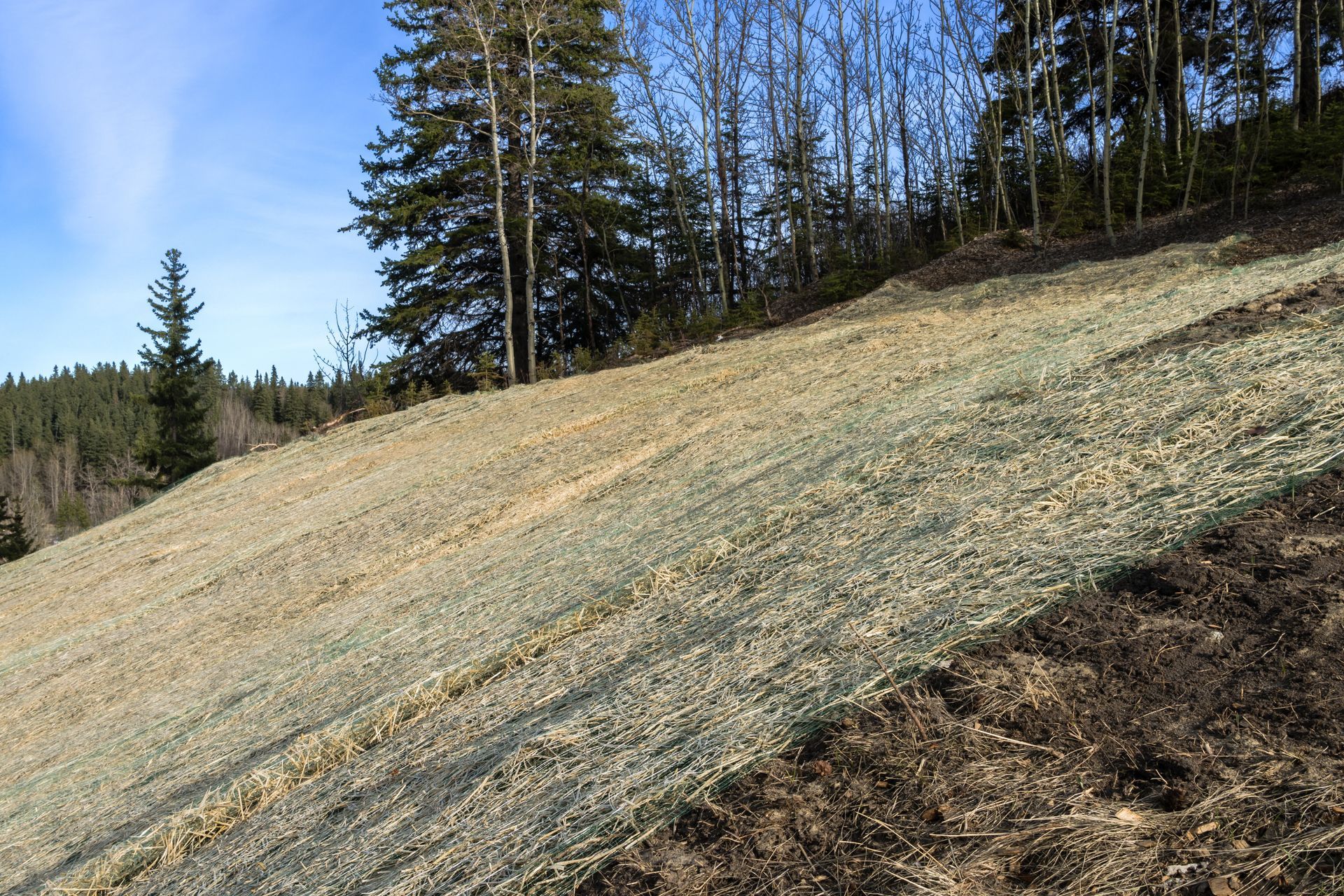
Soil Loss Where Water Concentrates
Erosion Control in Dimondale for properties experiencing runoff damage and exposed ground
Slopes lose topsoil when rain and snowmelt move faster than vegetation can slow the flow, and areas where downspouts discharge or where grading directs water develop channels and bare patches as soil is carried away. Erosion becomes visible when roots are exposed, mulch washes into lower areas, and gullies form along pathways that water follows repeatedly. Caleb's Green Thumb, LLC provides erosion control in Dimondale, Eaton Rapids, Lansing, and surrounding areas by identifying where water travels across your property, where soil is actively moving, and what adjustments will reduce further loss without requiring engineered drainage systems or extensive excavation.
This service focuses on interrupting flow, stabilizing exposed soil, and redirecting runoff before it gains enough speed to carve channels. Approaches vary depending on slope angle, soil type, and whether the problem is caused by concentrated discharge or sheet flow across a broad area.
Schedule a property evaluation to identify erosion patterns and discuss which control measures will address conditions specific to your site.
Why Erosion Happens and How to Stop It
Water moves soil when it flows faster than ground cover can absorb or slow it, and Michigan's freeze-thaw cycles worsen the problem by loosening soil structure and reducing plant root stability during early spring. Identifying the source of runoff—whether from roof drainage, paved surfaces, or uphill areas—allows control efforts to focus on the most damaging flow paths. Stabilization may involve adding ground cover, adjusting grade to spread flow over a wider area, or placing material that slows water velocity long enough for soil to settle out rather than wash away.
Once erosion control measures are in place, you notice that bare soil begins to hold rather than wash, mulch stays in beds after heavy rain, and channels that previously deepened with each storm stop expanding. The goal is visible soil retention and reduced sediment movement, not elimination of all water flow across the property.
This service addresses surface erosion and localized soil movement, but it does not include installation of french drains, retaining walls, or subsurface drainage systems. Properties with steep slopes or large volumes of concentrated runoff may require engineered solutions beyond basic erosion control.
Common Questions About This Service
Homeowners in Dimondale and neighboring communities frequently ask how erosion control works, what methods are used, and how long it takes for soil to stabilize after treatment.
Caleb's Green Thumb, LLC evaluates each property's runoff patterns and soil conditions individually and recommends control measures suited to your site. Call (517) 974-1223 to request an on-site assessment and estimate for erosion control work.
What causes erosion to worsen after snowmelt in Michigan?
Frozen ground prevents water from soaking in, so meltwater runs across the surface at high volume, and soil loosened by freeze-thaw action offers little resistance to flow, allowing rapid channel formation during early spring.
How do you determine where erosion control is needed?
Site evaluation identifies where soil is visibly moving, where water concentrates during rain, where vegetation is missing or struggling, and where gullies or exposed roots indicate active erosion.
What methods are used to slow water and hold soil?
Options include spreading flow over a wider path, placing rock or fibrous material in concentrated flow areas, establishing ground cover that slows runoff, and adjusting grade to reduce velocity on steep sections.
How long does it take for erosion control to show results?
Immediate changes include reduced sediment movement and less visible soil loss after the next rain, while long-term stability depends on vegetation establishment and whether seasonal conditions continue to challenge the treated area.
When should erosion control be addressed to prevent further damage?
Early intervention before channels deepen and before topsoil is completely stripped allows simpler solutions and reduces the need for regrading or material replacement later.