
Removing Stumps That Interfere With Lawn Use
Stump Grinding in Dimondale for stumps left after tree removal or existing obstacles in maintained yard areas
A tree stump disrupts mowing patterns, occupies planting space, and creates tripping hazards in otherwise usable yards. Stump grinding reduces the visible stump below ground level so the area can be replanted, sodded, or mowed without obstruction. Caleb's Green Thumb, LLC provides stump grinding in Dimondale, Holt, Lansing, and surrounding areas as a follow-up to tree removal or for stumps that have remained on properties for years. After grinding, you see a flat surface where the stump once stood, with wood chips left behind that settle into the depression or are removed depending on your plans for the area.
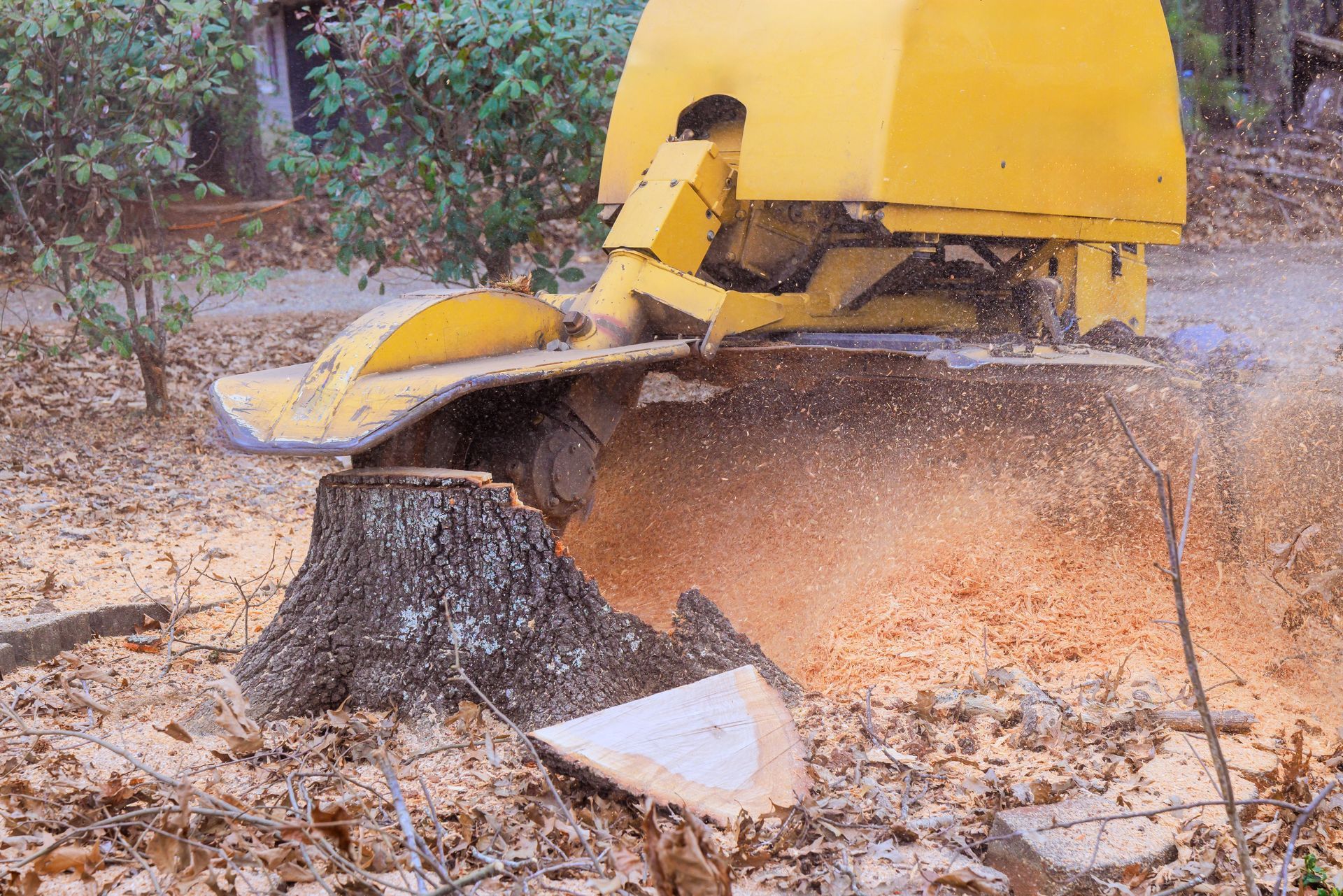
Grinding uses a rotating cutting wheel to chip away the stump and surface roots, leaving the area flush with surrounding soil. The process addresses the visible obstruction without excavating the entire root system, which remains underground and decomposes over time.
Schedule an estimate to review stump size, site access, and grinding depth based on your intended use for the cleared area.
What Stump Grinding Accomplishes and When It's Needed
Grinding eliminates the stump as a physical obstacle, which allows you to mow over the area, install landscape features, or replant without working around a protruding base. The depth of grinding depends on site conditions and future plans—shallow grinding suffices for mulched beds, while deeper grinding is needed if grass or new plantings will occupy the space.
Once grinding is complete, the stump no longer interrupts lawn maintenance equipment, and the area blends into surrounding grade after settling. Wood chips left in the depression can be mixed with soil and reseeded, removed entirely, or used as mulch elsewhere on the property.
Stump size and site access affect how much time grinding requires and whether equipment can reach the work area without damaging existing landscape features. Stumps near fences, retaining walls, or within narrow side yards require careful maneuvering to avoid collateral impact during grinding.
Questions About Grinding and Site Preparation
Property owners in Dimondale or a neighboring community frequently ask what happens during grinding, what remains afterward, and how the site is prepared for replanting or lawn restoration.
Caleb's Green Thumb, LLC evaluates stump size, site access, and grinding depth requirements to provide an accurate estimate based on your property's layout and plans for the cleared area. Request a site visit to review your stump grinding needs and receive a detailed project quote.
What happens to the stump during grinding?
The stump is reduced to wood chips by a rotating cutting wheel that grinds the visible stump and surface roots down to a specified depth, leaving chips and sawdust in the resulting depression.
How deep does stump grinding go?
Grinding depth varies based on the intended use of the area, with most residential projects grinding several inches below surrounding soil grade to allow for replanting or turf restoration without future settling issues.
When should stump grinding be scheduled after tree removal?
Grinding can occur immediately after removal or weeks later, though scheduling both services together reduces mobilization costs and completes site clearing in a single visit.
Why do some stumps take longer to grind than others?
Grinding time increases with stump diameter, wood density, and the presence of surface roots that extend beyond the main trunk, especially in species like maples and oaks common to Michigan properties.
What should I do with the wood chips left after grinding?
Chips can be spread as mulch, mixed with topsoil and reseeded, or hauled away depending on your landscaping plans and whether the area will be replanted immediately or left to settle.