Lawn Borders That Look Finished Every Time
Edging & Weed Whacking in Dimondale for property lines and landscape edges your mower leaves behind
Caleb's Green Thumb, LLC handles edging and string trimming for lawns in Dimondale, Grand Ledge, Potterville, and surrounding areas when mowers can't reach tight spaces around fences, flower beds, sidewalks, and tree bases. This service creates clean transitions between turf and hardscape or planted areas by cutting grass your mower blade misses. You see sharper lines along driveways, walkways, and garden borders where growth otherwise creeps outward or upward unchecked.
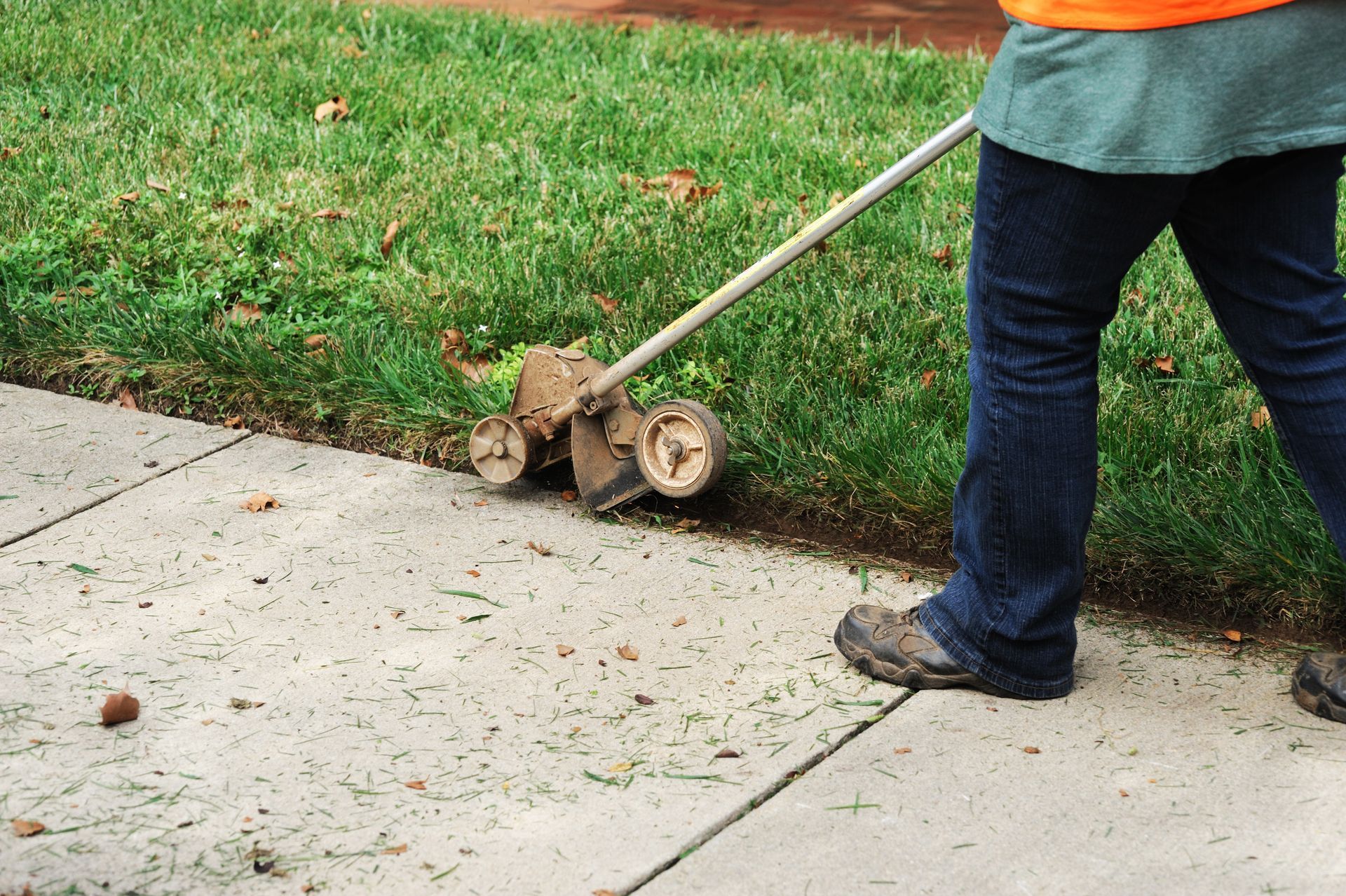
String trimming addresses grass and weeds that grow against vertical surfaces, while edging defines borders by cutting along the edge of pavement or bedding areas. Both steps control stubborn growth that blurs property lines and gives finished lawns an uneven appearance.
Request an estimate to review your property's trimming and edging requirements based on lawn size and landscape layout.
What Trimming and Edging Address Around Your Property
Trimming removes grass from areas the mower deck cannot reach—narrow spaces beside foundation plantings, fencing corners, mailbox posts, and the perimeter of tree trunks. Edging cuts a vertical line where turf meets another surface, which stops lateral spread and keeps mulch, gravel, or pavement visually separate from lawn areas.
After edging and trimming, borders between your lawn and walkways stay defined, and grass no longer grows onto concrete or into landscape beds. Turf edges appear uniform rather than ragged, and the lawn maintains consistent height across the entire property instead of taller patches where the mower couldn't finish.
This service works as part of regular mowing schedules or as a standalone finishing step when lawns need borders refreshed between full maintenance visits. Site conditions such as the number of obstacles, bed shapes, and paving materials affect how much time trimming and edging require.
Questions Property Owners Ask Before Scheduling
Homeowners in Dimondale and nieghboring communities often want to know how edging and trimming fit into lawn care routines and what results they should expect around landscape features and property edges.
Caleb's Green Thumb, LLC evaluates your property's trimming and edging needs based on lawn layout, landscape obstacles, and border materials. Schedule an assessment to determine service frequency and receive a detailed estimate for finishing work your mower cannot complete.
What areas benefit most from string trimming?
Trimming addresses grass around fence lines, tree bases, deck posts, and any vertical obstacle the mower cannot approach closely without damaging equipment or leaving uncut growth.
How does edging differ from trimming along sidewalks?
Edging cuts downward to create a clean vertical separation between turf and pavement, while trimming cuts horizontally at grass height to remove growth the mower missed.
When should edging be scheduled during the growing season?
Edging is typically performed when grass begins spreading beyond established borders, which in Michigan often accelerates during spring growth surges and after periods of consistent rainfall.
What happens to clippings after trimming and edging?
Clippings are either blown back onto the lawn to decompose or cleared from hard surfaces depending on property use and customer preference, especially along walkways and driveways where debris creates slip hazards.
Why do some properties need more frequent edging than others?
Properties with aggressive turf varieties, heavily irrigated lawns, or wide planting beds adjacent to pavement require more frequent edging because grass spreads faster under those conditions.