
Compacted Soil Opened for Better Growth
Lawn Aeration in Dimondale for turf weakened by heavy use, clay soil, or years without core removal
Compaction develops gradually as mowing equipment, foot traffic, and natural settling squeeze soil particles closer together, reducing the pore space that roots need for air, water, and nutrient uptake. Aeration creates thousands of small openings in the lawn surface, pulling out plugs of soil and leaving channels that relieve pressure and allow essential resources to penetrate below the thatch layer. Grass roots respond by growing deeper and branching more densely, which improves drought tolerance and overall turf vigor. Caleb's Green Thumb, LLC provides lawn aeration for residential properties in Dimondale, Eaton Rapids, Holt, and surrounding areas where compaction has limited root development and reduced the lawn's ability to recover from seasonal stress.
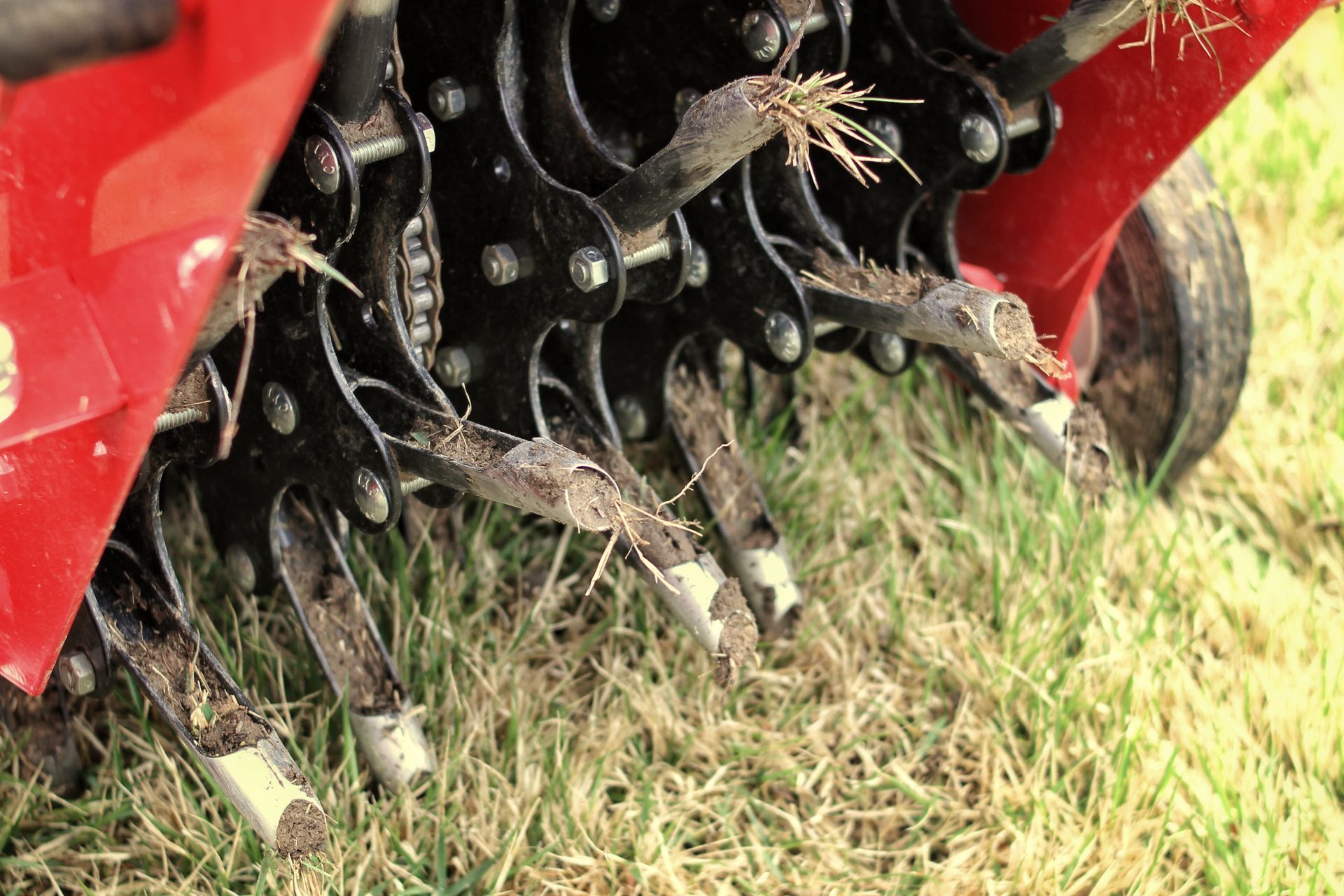
The process uses a core aerator that removes plugs roughly half an inch wide and two to three inches deep, spacing them across the lawn and leaving the extracted cores on the surface to break down naturally. Aeration works best when soil moisture is adequate—too dry and the tines cannot penetrate effectively, too wet and the machine creates additional compaction rather than relieving it.
Request a property assessment to determine whether your lawn shows signs of compaction and would benefit from aeration this season.
Why Aeration Addresses Compaction
Compacted soil restricts root growth to shallow depths because dense layers block downward expansion, forcing roots to spread laterally near the surface where they dry out quickly and struggle during heat. Aeration breaks through these dense zones, creating pathways for roots to extend deeper where soil stays cooler and moisture lingers longer between rain or irrigation.
After aeration, you see small soil plugs scattered across the lawn that disintegrate with mowing and rain over the next few weeks, followed by gradual improvement in turf color and density as roots explore newly opened soil. Grass that previously wilted quickly during dry spells holds up longer, and areas that felt spongy or uneven due to thatch buildup begin to firm as decomposition accelerates in the presence of increased oxygen.
Aeration does not produce overnight transformation, and heavily compacted lawns may require annual treatment for several years before soil structure stabilizes. The service pairs well with overseeding, as seed dropped into aeration holes enjoys better soil contact and protection than seed broadcast on hard, untreated ground.
Answers to Frequent Service Questions
Aeration timing and outcomes depend on soil conditions and lawn use patterns, and these answers address typical concerns for Dimondale area properties.
Caleb's Green Thumb, LLC offers lawn aeration services for residential properties around Dimondale where compaction limits turf health and root development. Schedule a lawn evaluation to review soil conditions and determine whether aeration fits your property's current needs and seasonal timing.
When is the best time to aerate lawns in Michigan?
Early fall aeration takes advantage of warm soil and active root growth while avoiding the heat stress of summer and the slow recovery of early spring when grass is still waking from dormancy.
How does aeration differ from dethatching?
Aeration removes soil plugs to relieve compaction and improve root penetration, while dethatching removes the layer of dead grass stems and roots that accumulates above the soil surface, and lawns may need one or both depending on specific conditions.
What signs indicate a lawn needs aeration?
Common indicators include water pooling on the surface after rain instead of soaking in, grass that thins despite adequate watering and feeding, and soil that feels rock-hard or resists penetration when you push a screwdriver into the ground.
Why do soil plugs get left on the lawn after aeration?
The plugs contain soil microbes that help break down thatch, and leaving them on the surface allows those organisms to reintegrate into the lawn while the plugs themselves crumble and fill in low spots as they dry and disintegrate.
Can aeration damage an existing lawn?
Core aeration is minimally disruptive and grass recovers quickly, though newly seeded lawns should wait until roots establish fully and thin or stressed turf may benefit from delaying aeration until conditions improve enough for the lawn to fill in the small gaps created by plug removal.