
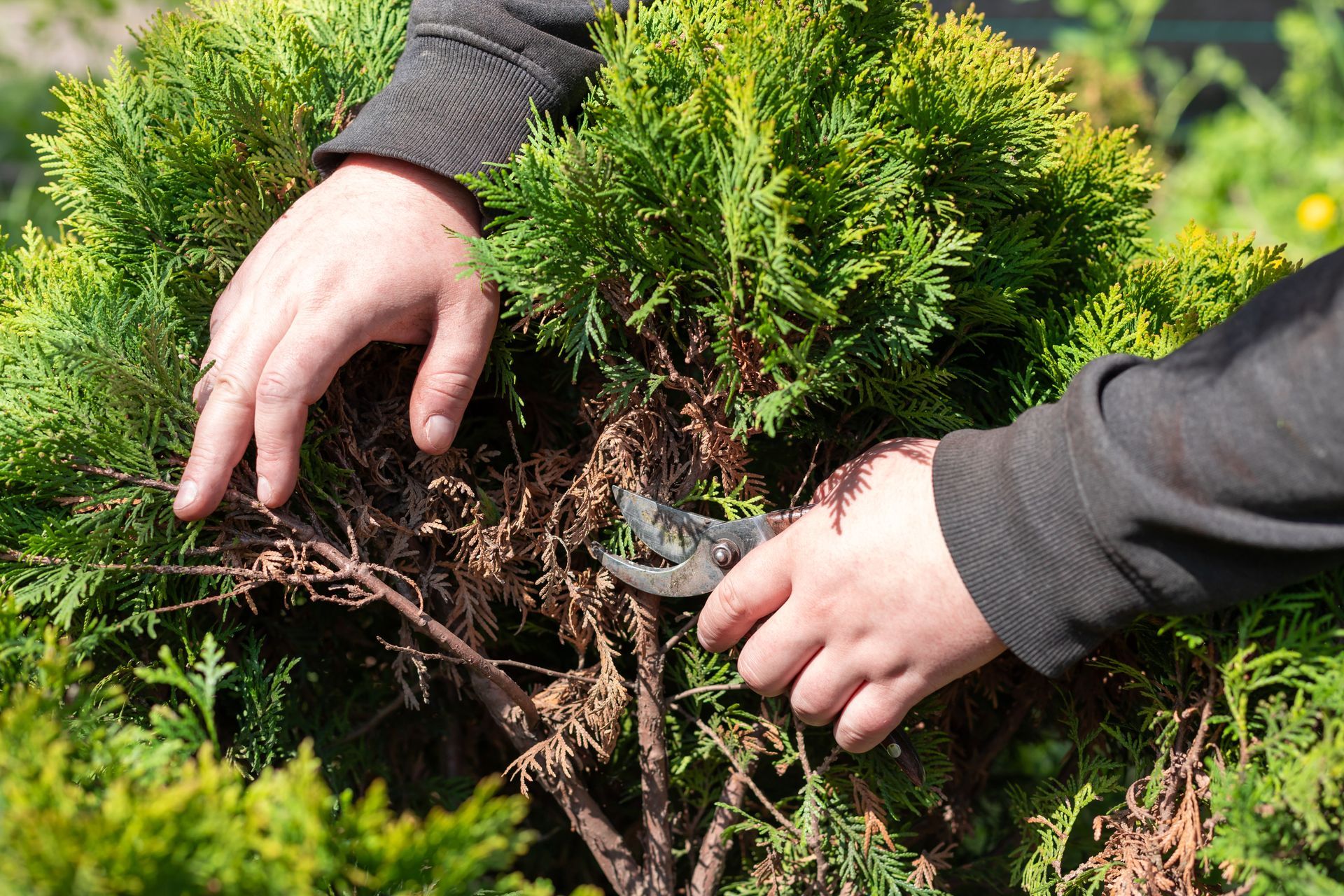
Overgrown Shrubs That Block Light and Paths
Bush & Hedge Trimming in Dimondale for properties where plantings have grown past intended boundaries
Shrubs extending over walkways, crowding entry areas, or shading ground covers signal that growth has exceeded the space allowed during original planting. Caleb's Green Thumb, LLC provides bush and hedge trimming in Dimondale, Holt, Grand Ledge, and surrounding areas that bring overgrown plantings back to cleaner outlines and prevents further encroachment onto lawns and paved surfaces. Each plant is evaluated for its current condition and natural growth habit before any cuts are made, ensuring that trimming supports health rather than forcing an unnatural shape.
This service controls height, width, and density by removing excess growth while preserving the structure that allows plants to recover quickly. Trimming accounts for whether a shrub blooms on new wood or old, whether it tolerates heavy reduction, and whether its growth pattern requires selective thinning or surface shearing.
Request a property walk-through to identify which plantings require immediate attention and which can wait until the next maintenance window.
How Trimming Restores Order Without Damaging Plants
The process begins by identifying which branches contribute to overgrowth and which support the plant's long-term form. Cuts are made at nodes or lateral branches rather than mid-stem, allowing the plant to close wounds efficiently and direct energy into controlled regrowth. Timing matters—trimming spring-blooming shrubs immediately after flowering preserves next season's buds, while late-season work on evergreens prevents winter dieback on freshly cut tissue.
Once trimming is finished, you notice clear edges along walkways, restored sight lines near driveways and entryways, and daylight reaching ground-level plantings that were previously shaded. Mulch beds appear larger because shrubs no longer spill past their intended footprint, and mowing becomes simpler when lawn edges are no longer obstructed by low-hanging branches.
This service removes debris as part of the process, but it does not include plant removal, stump grinding, or installation of new landscape material. Properties with severely neglected hedges may require staged trimming over multiple seasons to avoid shock and allow gradual recovery.
Questions About Maintaining Shrubs and Hedges
Homeowners in Dimondale and neighboring communities often ask about timing, frequency, and how trimming affects plant health and appearance throughout the year.
Caleb's Green Thumb, LLC evaluates each property's plantings individually and provides trimming that aligns with growth patterns and seasonal conditions. Schedule an estimate to review which shrubs need immediate work and what maintenance cycle will keep growth manageable.
What determines the best time to trim a particular shrub?
Bloom timing and growth habit guide the schedule—spring bloomers are trimmed right after flowering to protect next year's buds, while shrubs that bloom on new wood can be trimmed in late winter before active growth begins.
How often should hedges be trimmed to maintain a formal appearance?
Formal hedges typically require trimming two to three times during the growing season to hold tight shapes, while informal plantings may only need annual maintenance to control size and remove damaged growth.
Why do some shrubs look thin or sparse after trimming?
Plants that have been allowed to grow unchecked for years often lack interior foliage because sunlight never reached the inner branches—trimming reveals that sparse structure, and recovery requires time and sometimes selective thinning to encourage interior bud break.
What should I look for when evaluating trimming quality?
Clean cuts that don't leave stubs, preserved natural plant form rather than unnatural geometric shapes, and no torn bark or shredded branch ends indicate careful work that supports plant health.
How does Michigan weather affect trimming schedules?
Freeze-thaw cycles and heavy snow can damage plants trimmed too late in fall, and trimming during active spring growth can slow blooming, so timing around Dimondale's seasonal transitions prevents stress and lost flowers.