
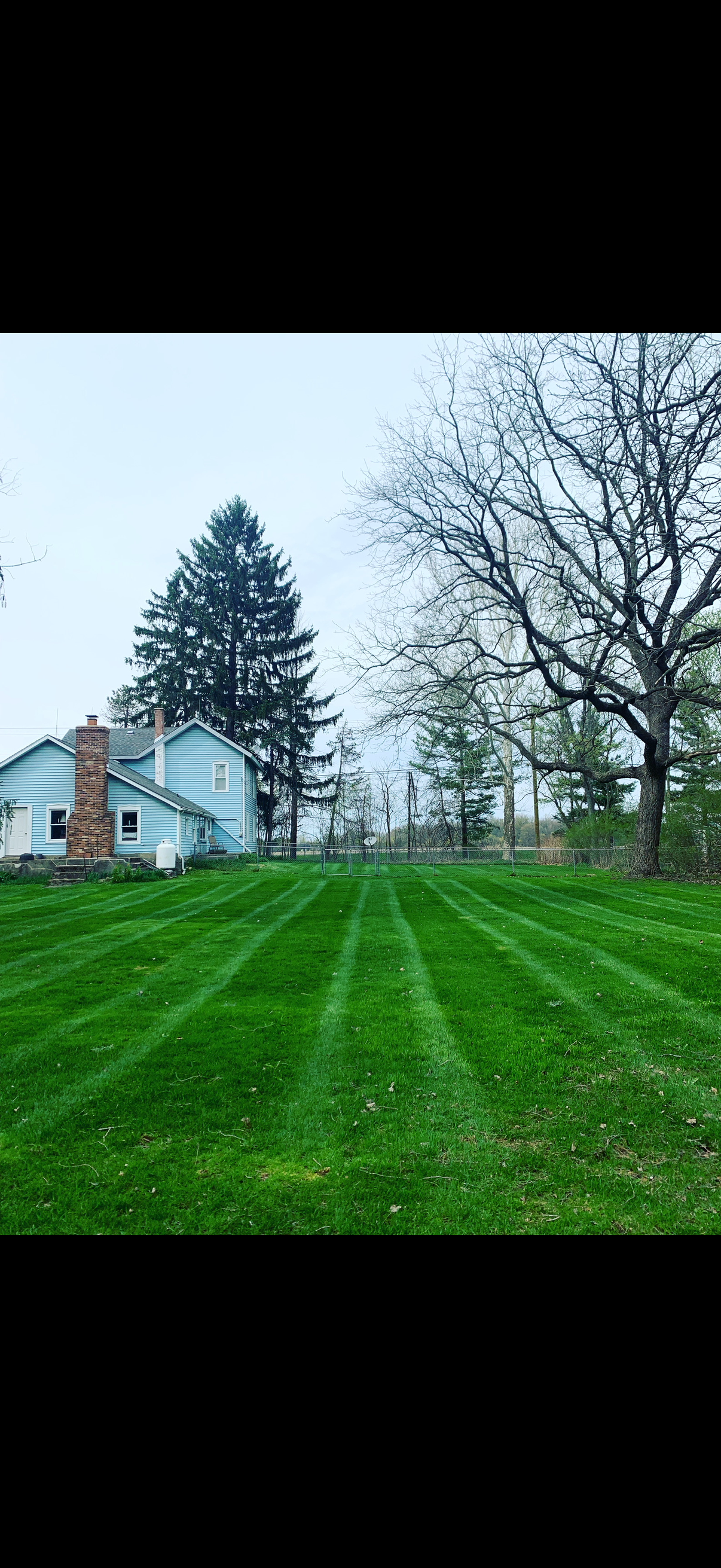
Lawns That Stay Manageable All Season
Lawn Mowing & Maintenance in Dimondale for properties where fast spring growth overwhelms weekly schedules
Michigan lawns surge during late spring and early summer, often adding several inches of growth in just days when rain and warmth align. Caleb's Green Thumb, LLC handles lawn mowing and maintenance for residential properties in Dimondale, Potterville, Eaton Rapids, and surrounding areas, keeping turf cut to appropriate heights and preventing the buildup that creates clumps, uneven texture, and stresses the grass itself. You avoid the cycle of letting growth pile up, then scalping it back down in one aggressive pass.
The service involves mowing at intervals that match seasonal growth rates, trimming around edges and obstacles, and removing clippings or distributing them evenly depending on lawn condition and weather. Consistent cutting height prevents shock to the turf and keeps the root system stable through the active months. Routine maintenance also means clearing walkways, blowing debris from hard surfaces, and leaving the property tidy after each visit.
Request an estimate to establish a mowing plan based on your property size and seasonal growth patterns.
What Happens When Mowing Stays Consistent
Regular mowing keeps grass blades at a length that promotes lateral growth and denser coverage rather than forcing all energy into vertical shoots. When you maintain appropriate height through the growing season, the lawn develops a thicker mat that shades out some weed seeds and handles foot traffic without thinning as quickly. Mowing frequency adjusts naturally as growth slows in mid-summer heat and picks up again during fall moisture.
After each visit, you see clean lines along beds and walks, uniform turf height across open areas, and no matted clumps that smother underlying grass or create brown patches once they dry. The lawn looks intentional rather than patchy, and the reduced stress from consistent cutting means fewer bare spots and less need for emergency overseeding mid-season.
Maintenance also includes monitoring for obstacles, adjusting patterns to avoid ruts in wet areas, and keeping equipment clean to prevent cross-contamination from properties with disease or weed pressure. These practices don't eliminate all turf problems, but they reduce the compounding stress that turns small issues into visible decline.
Questions Homeowners Ask Before Scheduling
Mowing schedules and practices vary across properties, and the answers below address common concerns for residential lawns in Dimondale during Michigan's active growing months.
Caleb's Green Thumb, LLC works with residential clients around Dimondale to maintain lawns through Michigan's variable growing season. Schedule a property review to establish a mowing plan that matches your lawn's growth cycle and keeps the landscape manageable from spring green-up through fall dormancy.
How often does mowing happen during peak growth?
Frequency adjusts based on growth rate, which accelerates during cool, wet stretches in May and June and slows during July heat, so visits may range from weekly during surges to every ten days when growth plateaus.
What happens if rain delays a scheduled visit?
Wet turf compacts under mower weight and clippings clump rather than distribute, so mowing resumes once the lawn surface firms enough to avoid rutting and the grass dries enough to cut cleanly.
Why does mowing height matter for lawn health?
Cutting more than one-third of the blade length at once stresses the plant and exposes soil to direct sun, which dries roots faster and gives weed seeds better germination conditions than taller, shaded turf.
What gets included in routine maintenance?
Each visit typically covers mowing, trimming around beds and structures, edging walks or drives if needed, and clearing clippings from pavement so the property looks finished rather than half-done.
When should mowing start and stop in Michigan?
Mowing begins once grass reaches active growth in mid-spring, usually late April or early May depending on warmth, and continues until fall growth slows enough that the lawn no longer gains noticeable height between visits, often mid to late October.