
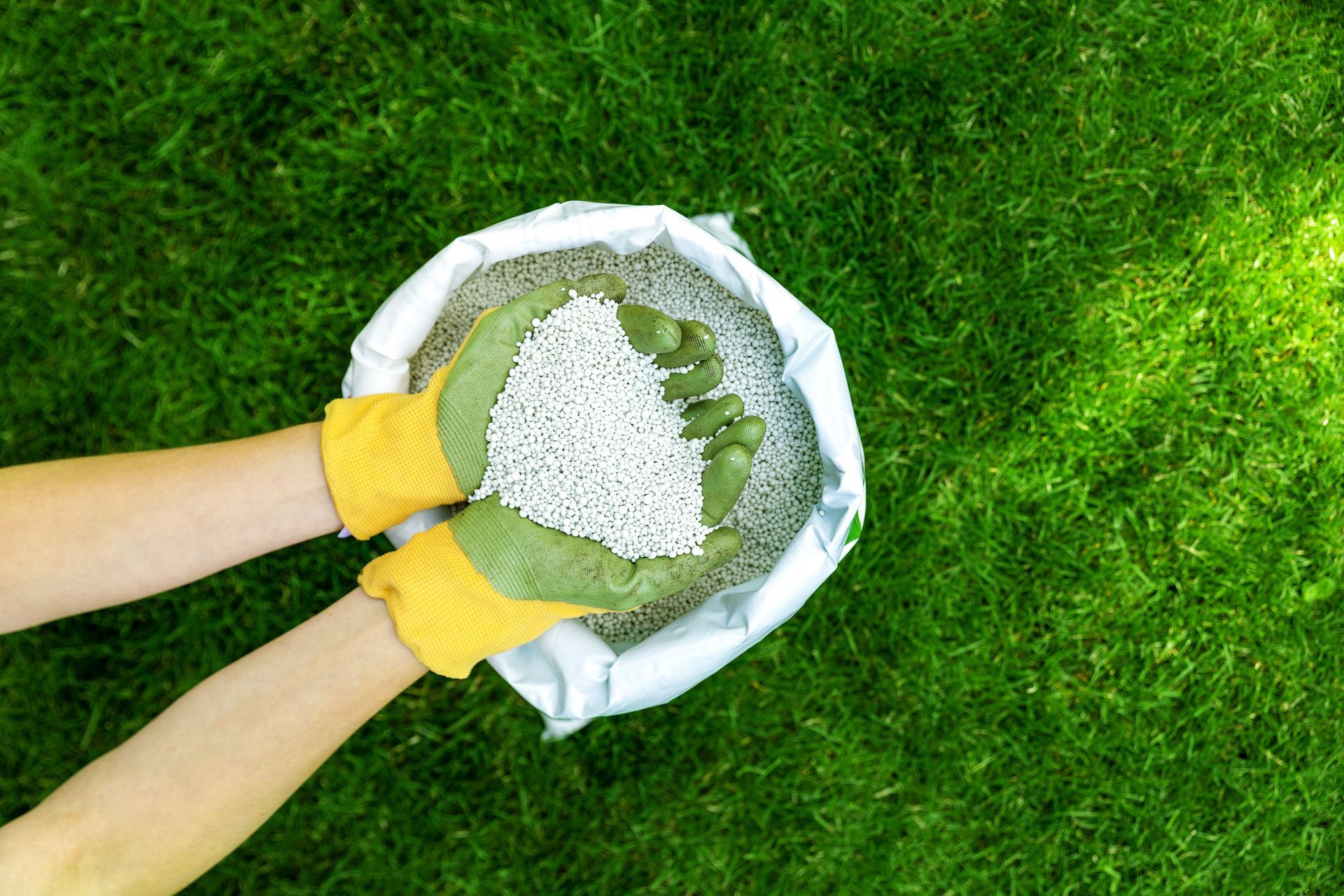
Nutrients Applied When Turf Needs Them
Lawn Fertilization in Dimondale for lawns that show pale color, slow recovery, or weak growth during active periods
Turf that grows slowly despite adequate water, recovers sluggishly from mowing, or fades to yellow-green during peak season often signals nutrient depletion in the soil. Fertilization supplies nitrogen, phosphorus, and potassium in forms grass plants can absorb, supporting root development, blade color, and the density that helps lawns withstand traffic and seasonal stress. Caleb's Green Thumb, LLC provides lawn fertilization for residential properties in Dimondale, Grand Ledge, Potterville, and surrounding areas, timing applications to match Michigan's growing cycle rather than following a rigid calendar that ignores lawn condition.
Application involves spreading granular or liquid fertilizer at rates based on turf type, existing soil fertility, and seasonal growth patterns, then watering in the product to move nutrients into the root zone. Spring applications support green-up and early growth, while late-season feeding strengthens roots before winter dormancy without pushing excessive top growth that weakens the plant.
Schedule a consultation to review your lawn's current condition and discuss fertilization timing that aligns with its seasonal needs.
What Proper Fertilization Requires
Effective fertilization depends on matching nutrient ratios to lawn needs, which change as turf moves through spring growth, summer stress, and fall recovery phases. Nitrogen drives blade growth and color but excess application during heat accelerates water demand and increases vulnerability to disease. Phosphorus supports root expansion, especially important during establishment or recovery, while potassium improves stress tolerance and helps grass handle temperature swings and drought.
After fertilization and irrigation, you see deeper green color emerge within a week or two as nitrogen moves into the plant, followed by improved blade density and faster recovery from mowing or light damage over the following weeks. The lawn maintains color longer into dry spells and rebounds more quickly after traffic or weather stress compared to unfed turf.
Fertilization does not fix underlying problems like poor drainage, severe compaction, or inadequate sunlight, and over-application can burn turf or contribute to environmental runoff. Timing and rate adjustments based on visual cues and soil testing produce better results than generic seasonal programs that ignore site-specific conditions.
What Property Owners Usually Ask
Fertilization practices vary based on lawn health and environmental factors, and these responses address typical questions for properties in Dimondale and neighboring communities.
Caleb's Green Thumb, LLC tailors lawn fertilization services to residential properties around the Dimondale area based on observed turf health and Michigan's seasonal climate. Request service information and an estimate to discuss fertilization timing and approach for your specific lawn conditions.
How often should lawns be fertilized in Michigan?
Most lawns benefit from two to four applications per year, typically in late spring, early fall, and sometimes mid-summer or late fall, depending on turf condition, soil fertility, and growth patterns observed during the season.
What role does soil testing play in fertilization?
Testing reveals existing nutrient levels and pH, allowing adjustments to fertilizer formulas so you add what the soil lacks rather than applying excess nutrients that turf cannot use and that may wash into waterways.
Why does timing matter for lawn fertilizer applications?
Applying nitrogen during peak heat increases water demand and disease risk, while late-fall feeding supports root growth without pushing top growth that would be damaged by frost, so timing aligns feeding with the lawn's physiological needs.
What happens if fertilizer is applied unevenly?
Uneven distribution creates dark green stripes where product overlaps and pale or slow-growing areas where coverage is missed, resulting in a blotchy appearance that takes weeks to even out as nutrients move through the soil.
Can fertilization help lawns recover from drought or disease?
Fertilization supports recovery by providing nutrients for new growth once the stress resolves, but feeding a lawn during active drought or infection can worsen the problem by forcing growth the plant cannot sustain under compromised conditions.