
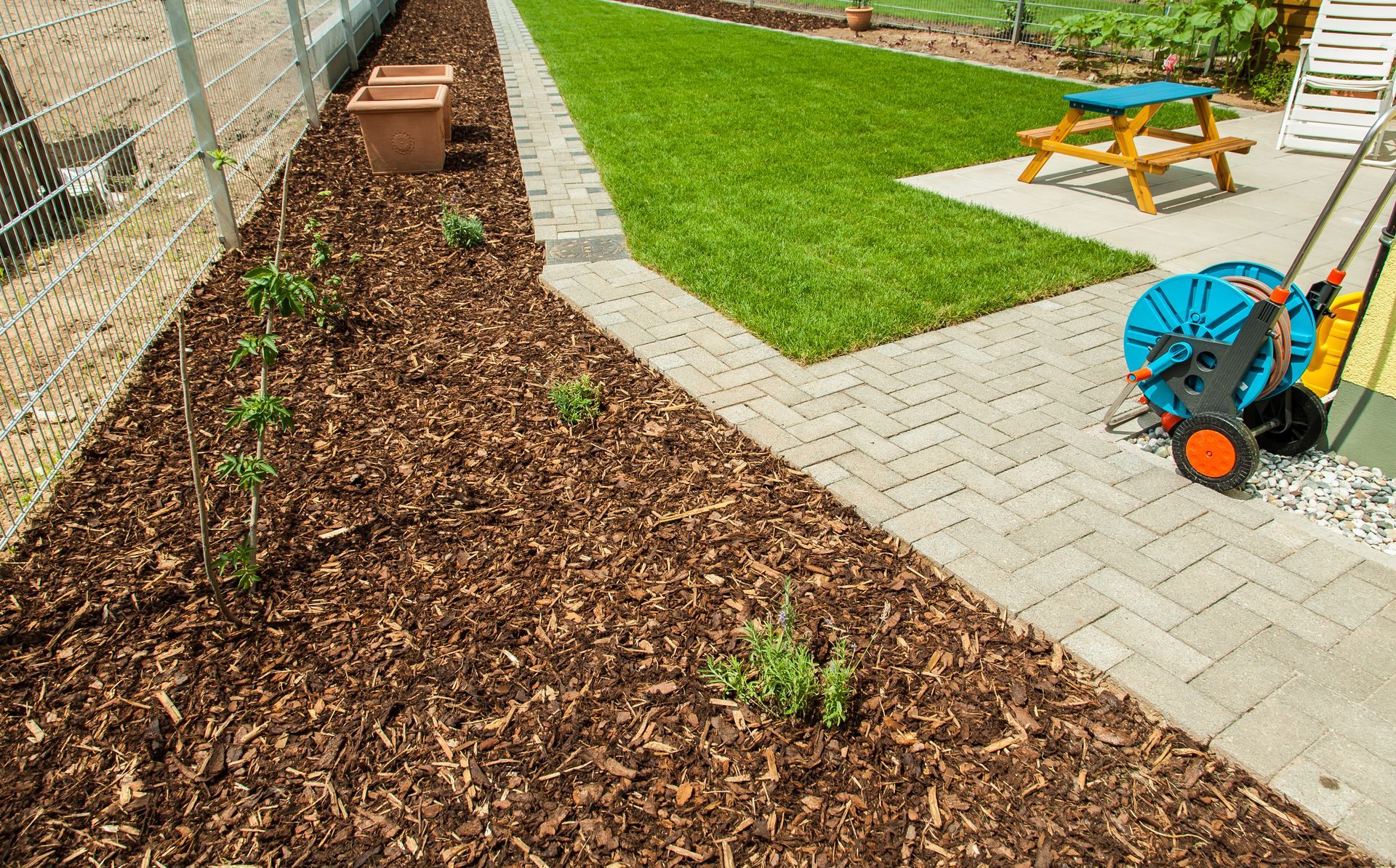
Planting Beds Finished and Protected
Mulching in Dimondale for landscape beds that look unfinished, dry out quickly, or struggle with weed pressure
A layer of mulch moderates soil temperature swings, slows evaporation during dry stretches, and blocks sunlight from reaching dormant weed seeds that wait in bare soil for the right conditions to sprout. Caleb's Green Thumb, LLC provides mulching services for residential properties in Dimondale, Lansing, Grand Ledge, and surrounding areas, refreshing existing beds, defining new landscape areas, and applying mulch around trees, shrubs, and perennial plantings to improve both appearance and growing conditions. You see cleaner bed edges, reduced watering demands, and fewer weeds breaking through during the growing season.
The process involves spreading shredded bark, wood chips, or other organic material to an appropriate depth around plantings, keeping mulch pulled back from stems and trunks to prevent moisture buildup that encourages rot or pest activity. Installation includes edging beds for definition, removing old mulch if it has compacted or decomposed into a mat, and ensuring even coverage that does not smother low-growing plants.
Schedule a property consultation to review your planting beds and discuss mulch depth, material, and timing for seasonal application.
What Mulching Actually Accomplishes
Mulch works as an insulating barrier that keeps soil cooler during summer heat and warmer during early-season cold snaps, reducing stress on plant roots that would otherwise respond to constant temperature fluctuations by slowing growth or entering dormancy. The layer also absorbs rainfall gradually, reducing runoff and allowing water to soak into the root zone instead of puddling on compacted soil or washing down slopes.
After mulching, planting beds show defined edges and uniform color that frame the plants rather than blending into surrounding turf or bare ground. Soil beneath the mulch stays visibly moist longer between waterings, and weeds that do emerge are easier to pull because their roots grow in the loose mulch rather than anchoring in hard, exposed soil.
Mulch breaks down over time as microbes decompose organic material, so beds require replenishment every one to two years depending on material type, climate exposure, and whether the existing layer has settled below effective depth. Overmulching—piling material too deeply or against plant stems—creates anaerobic conditions that suffocate roots and invite fungal problems, so proper depth and placement matter more than simply adding more material each season.
Questions Before Starting Your Project
Mulching practices and timing depend on bed condition and landscape goals, and these answers address common concerns for residential properties in Dimondale and surrounding areas.
Caleb's Green Thumb, LLC handles mulching for landscape beds across residential properties in Dimondale or a neighboring community as part of seasonal cleanup and curb appeal maintenance. Request an estimate to review your planting beds and establish a mulching plan that fits your property's layout and seasonal timing preferences.
What depth of mulch should be applied to planting beds?
A layer of two to three inches provides weed suppression and moisture retention without suffocating plant roots or creating a barrier that blocks water penetration, and depth is measured after the mulch settles naturally within a few days of installation.
How does mulching help control weeds in landscape beds?
Mulch blocks sunlight from reaching the soil surface, which prevents most weed seeds from germinating, and the physical barrier makes it harder for emerging weeds to push through, though persistent perennials may still appear and require manual removal.
When is the best time to mulch around plantings in Michigan?
Spring mulching takes advantage of warming soil and suppresses early weed growth before summer heat arrives, while fall application provides insulation as plants prepare for winter dormancy and reduces erosion during freeze-thaw cycles.
What happens to old mulch when new material is added?
Decomposed mulch that has broken down into fine particles can be left in place as it enriches the soil, but compacted or matted layers should be removed or raked loose before adding fresh material to prevent creating an impermeable barrier that sheds water instead of absorbing it.
Why should mulch be kept away from plant stems and tree trunks?
Direct contact between mulch and bark holds moisture against the plant, creating conditions that promote rot, insect activity, and disease entry points, so a small gap around the base allows air circulation and keeps the stem or trunk dry.